
Loneliness is a blight on society, and a public health and human rights failure says the Down’s Syndrome Association (DSA), as it embarks on its annual Down’s Syndrome Awareness Week (16 to 22 March) to celebrate the lives and contributions of people who have Down’s syndrome, and to recognise their right to be genuinely included in their communities.
Evidence shows that people with learning disabilities, including people who have Down’s syndrome experience loneliness more often and more intensely than the general population. A 2019 report by Mencap, for example, found that people with a learning disability were seven times more likely to be lonely than the general public. This isolation can have profound and far-reaching effects on their lives, influencing their health and wellbeing, sense of identity and belonging, life opportunities, and the ability to make meaningful supportive friendships.
And this shows no signs of improvement. When asked by Downs Syndrome International (DSI) to choose a theme for the annual World Down Syndrome Day on 21 March the DSI’s group of ambassadors, made up of people who have Down’s syndrome from around the world, said that this was the issue which resonated most profoundly for them. Together Against Loneliness is a global call to action which challenges all of us to break down the barriers which are perpetuating isolation.
Through its work and daily interactions with people who have Down’s syndrome and their families, the DSA witnesses how persistent levels of isolation amongst people who have Down’s syndrome results in an inability to form friendships, or to enjoy the opportunity to socialise and feel a sense of belonging from being in an inclusive workplace, school, or community activity. The inability to build and sustain connections with people further increases time spent alone, compounding cycles of exclusion.
The DSA has joined the DSI in calling upon politicians, employers, teachers and the general public to create the conditions so that inclusion goes beyond just being present, but is built around enabling people who have Down’s syndrome to forge and maintain meaningful connections with the people around them.
This includes greater and better:
- Access to inclusive education for all children who have Down’s syndrome.
For those parents who want it, to have access to mainstream schools, learning alongside their peers, achieving their learning potential through access to skilled teachers, and taking part in all aspects of school life. - Access to meaningful, inclusive workplaces.
Through the DSA’s WorkFit programme, we know that people who have Down’s syndrome want to work and can find successful employment when they are matched with inclusive employers who are trained in how to adjust their workplace and provide paid opportunities in a welcoming and supportive environment. With a 90%+ retention rate, the WorkFit programme demonstrates how people who have Down’s syndrome can thrive in paid employment, become independent and use the workplace as a place to build productive relationships. - Access to leisure and community activities.
Many leisure and social opportunities are inaccessible for people who have Down’s syndrome, limiting friendships, community cohesion and wellbeing. For children and young people, this exclusion starts early and shapes their social worlds for years to come. Through DSA’s DSEngage and DSActive programmes, we offer specialized, adapted leisure and social opportunities for people with Down’s syndrome alongside their peers. The programme shows what real inclusion can look like, and its positive impacts on friendships, confidence and sense of belonging.
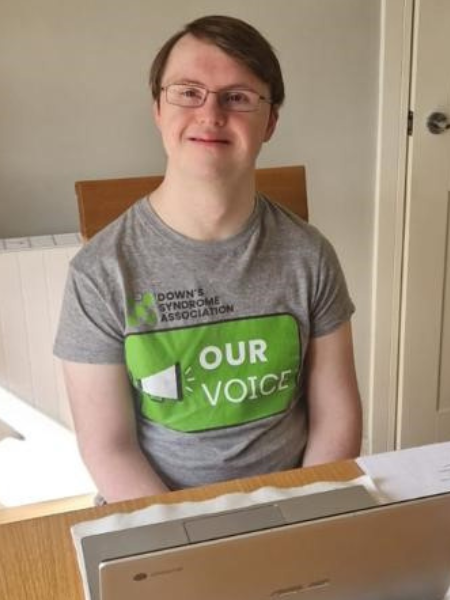 Joe is a member of Our Voice, a network of people who have Down’s syndrome who inform and guide the work of the DSA. Talking about how friendship has enriched his life, he says:
‘It’s a powerful thing when people see you different from everyone else and chooses to be your friend simply for who you are. When I think about friends from my past and present it makes me feel so appreciative and fortunate for the strength I have in my life…… If you find someone who can ‘ask you are you alright?’, or ‘how are you doing?’ because they sense you are going through tough times, they must be a good friend. They really care for you. Together against loneliness means finding that unified togetherness.’
The DSA has arranged a range of activities throughout Down’s Syndrome Awareness Week in the UK to focus attention on the issue and to raise funds to enable the charity to continue to support people who have Down’s syndrome and their families, as well as campaign for better inclusion. Awareness Week activities include:
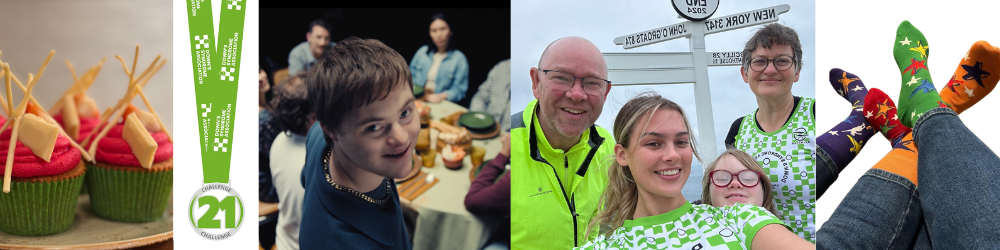
- Challenge 21
A fun and flexible virtual fundraising challenge taking place from 1 March to 21 March. As Down’s syndrome is caused by the presence of an extra copy of chromosome 21 we have asked the public to come up with their own challenges based around the number 21 – 21 days of activities, or of kindness or of trying new things. - Run Across UK
The team will be running, walking and cycling 1,000 miles from John O’Groats to Land’s End to try to raise £50,000 for the Down’s Syndrome Association as well as show the benefits of keeping fit. - #LotsOfSocks
People from around the world will be wearing brightly coloured, mismatched socks. Produced by Down Syndrome International with a new design every year, the socks have proven to be a great way to send a message that people who have Down’s syndrome want to be seen. - Light Up
Iconic landmarks from around the UK, including Alexandra Palace, Tottenham Hotspur Stadium, and Cardiff Castle will join others from the world to light up in blue or blue & yellow – the colours chosen to represent World Down Syndrome Day. - JUST EVOLVE
A hard-hitting international awareness campaign made by CoorDown, Italy’s national coordinating body of Down syndrome associations, and supported by the DSA. This year’s campaign JUST EVOLVE, fronted by UK actor Noah Matthews Matofsky, calls on all of us to take a cultural step forward and consign to history insulting words of disability used to insult, ridicule or degrade. - No.21 Cupcake
Created by one of Hilton’s amazing chefs, Chef Luis, and taste-tested by a top team of Hilton employees who have Down’s syndrome, the cupcake is being sold across Hilton Hotels in London with all profits going to the DSA.
Says Carol Boys, OBE, Chief Executive of the Down’s Syndrome Association:
‘This year’s global theme Together Against Loneliness highlights a pressing truth – loneliness is widespread among people who have Down’s syndrome, and it is preventable. Loneliness is not an individual failing; it is a societal one and the result of systems and environments that exclude. This means we have the ability to dismantle it through inclusive education, employment, and community life. Everyone can play their part in addressing this failure. From big policy changes to simple, small things – like a smile, a conversation in the queue for the bus, taking time to listen, making simple changes to the way you do an activity – these can all make a huge difference.’
For more information about the Down’s Syndrome Awareness Week, click here. And for World Down Syndrome Day, click here.