
We are proud to announce Lou Stein as a new ambassador at the Down’s Syndrome Association. Lou tells us about his background and achievements and how he hopes to work with the charity and the way in which his son Ethan has been his biggest motivational force.
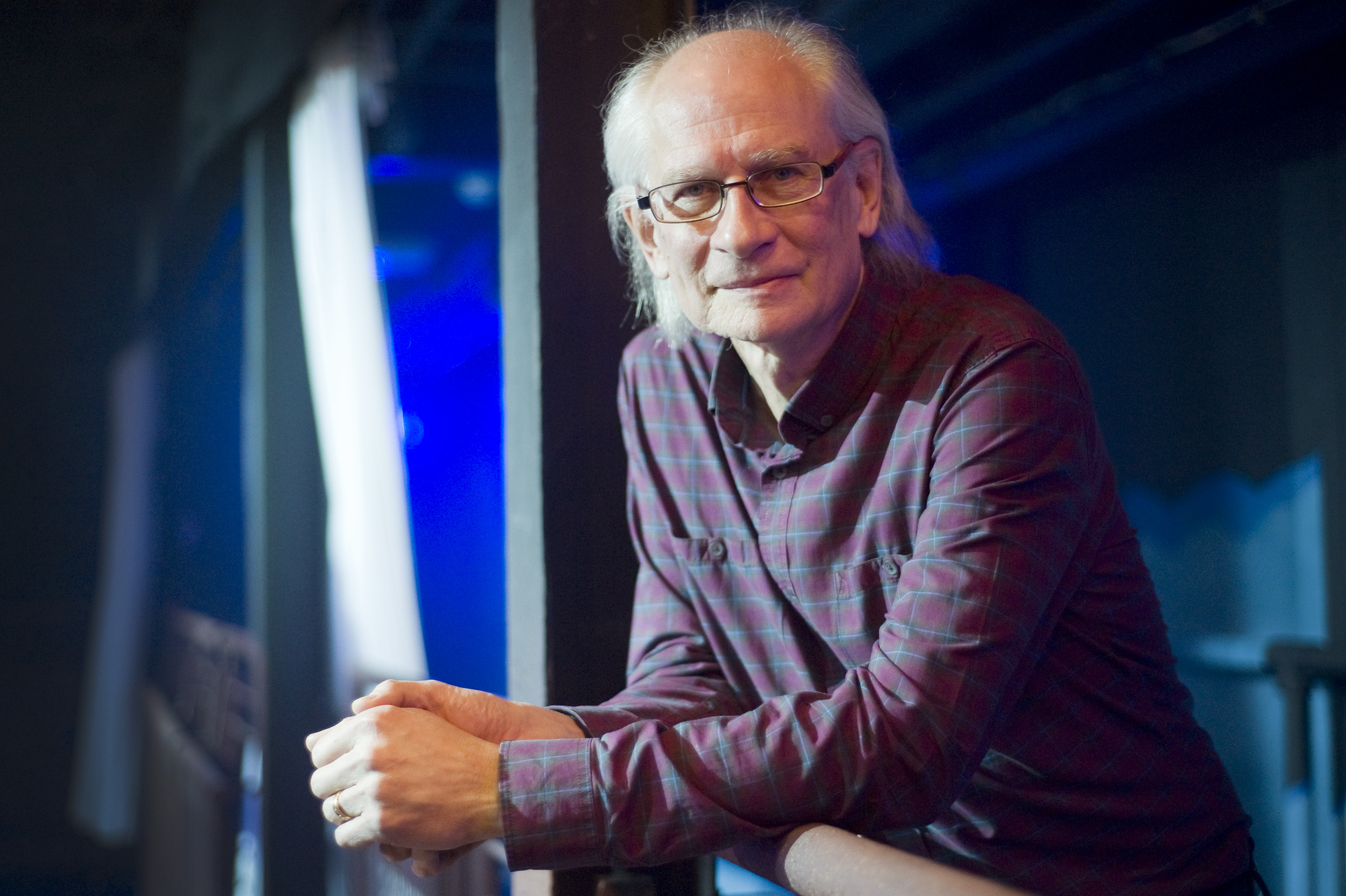
Lous Stein is announced as a new ambassador of the Down’s Syndrome Association
Creativity and Down’s syndrome
The best way to introduce myself is to talk about what a huge effect my son Ethan, who is 19 and has Down’s syndrome, has had on my own creativity as a theatre director, writer and radio producer.
I’ve worked with such actors as Dame Helen Mirren (playing the role of Madame Bovary in Edna O’Brien’s adaptation), Helena Bonham-Carter (in one of her first stage roles in The Barber of Seville), Benedict Cumberbatch and, at the latest count, four Doctor Who’s. Ethan would be my lucky charm, accompanying me to opening nights and meeting wonderful actors such as Rosamund Pike, Downton Abbey’s Jessica Brown Findlay and leading talents including David Walliams, Michelle Collins and film director Dexter Fletcher. No matter what the emotional high and lows of the evening were, Ethan had a knack for making them laugh and smile, and somehow want to be playful too.
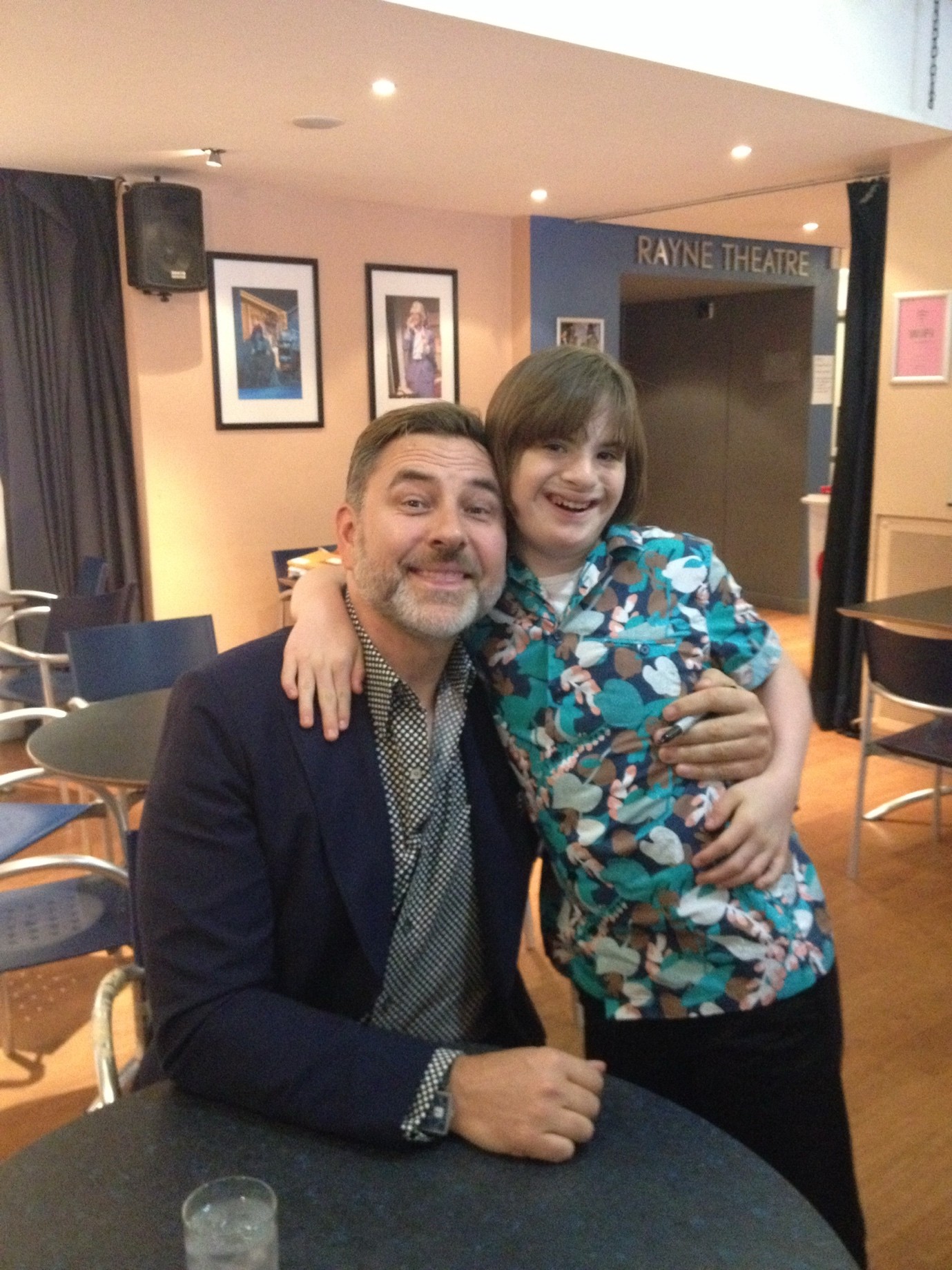
Ethan enjoyed meeting actors such as David Walliams
When I was commissioned to write and curate a series of essays which I called The Father Instinct, which was about how children inspire (or not!) creative thought and output, Ethan’s role in my work became central. I began to think of myself as a father of a sparky young man first, rather than the dad of a young man with barriers he has to overcome. His presence in my life seemed so natural and normal when I considered in the piece what our relationship was and how we could grow it. One sentence in the broadcast summed up what I mean by this:
‘His presence demands a movement away from my ego and a new generosity which is the beginning of the fatherly obligation for me, an obligation to protect him and to help him start his own journey and become a better man than I am.’
What my son and I do together
Ethan and I do whatever most parents do with their children. We go swimming together once a week. We go to the movies every so often to see films like Inside Out. Occasionally I convince him to see an arty movie like Flow, which he enjoys as well. He loves the Mission Impossible franchise, but he tends to see that with his mum, who also loves it. Our children are generally guided by what inspires their parents. If you love football, you’ll probably find your son or daughter engaging with that. Or travel. Or food.
Ethan has been a serious foodie since he was about 8 years old. I truly believe that he was inspired by the gourmet chef rat in the film Ratatouille, who loved unusual tastes and dreamt of being a chef with his own restaurant. Much like Ethan today. Ethan’s mum, Deirdre, is a contemporary music composer. I love going to concerts and theatre with Ethan because he gets so absorbed in it. At home, when he plays music that moves us to dance, we have a good bop. He also likes Bob Dylan, which is a real musical touchstone for both of us.
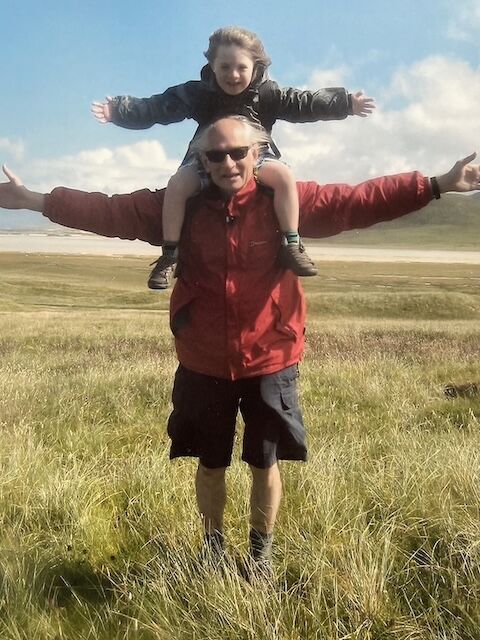
Lous and Ethan having fun together
DSA’s role in our life
The Down Syndrome Association has always been an important source of connection to the Down’s syndrome community. Actually, just knowing it’s there when we need a kind word or informed data is important to us. The information available is precisely tailored to the profile of people who have Down’s syndrome, so it’s invaluable. It is so comforting to know that the DSA is there when we need help, support, information or just a knowledgeable person on the other end of the line who understands since most of the staff I have encountered have direct personal experience. We recently needed some advice regarding Ethan’s school placement. The response was sympathetic and quick, and a letter of support was offered.
Why I’m keen to work with the DSA
Widening my involvement with the DSA by becoming an ambassador is something I am honoured to do. I want to help further develop DSA’s national and international profile by sharing my experience and connections with new external partners. As I get to learn more deeply about DSA programmes, like the My Perspective photo competition and the invaluable WorkFit programme, I want to help seek out influential partners and organisations who can further the aims of the DSA.
In terms of my personal vision, now that my son is 19, I can clearly see that the equivalent of Higher Education skills to prepare him to become a confident part of society is scarce. I would say non-existent. As the pressure continues from the government to get more disabled people into work, there is an obvious barrier to this for young adults who have Down’s syndrome. They are generally denied the options that most young people have. They don’t have access to loans for Higher Education education and there are barriers to acceptance anyway. As LA’s are forced, because of financial constraints, to reduce skills-based support around the aspirations of our young people, they are curiously expecting them to be able to function in a workplace without the benefit of a progressive education programme to support them.
In my own field this plays out in a very obvious way. Most actors have the benefit of learning their craft in an educational setting before heading out to auditions, performances and being in the spotlight as a young performer. If Ethan were pursuing a career in performing arts (as many young people who have Down’s syndrome desire to) he wouldn’t have the same tools to enter the profession that most other young actors have.
My vision of change
There are hundreds of Higher Education universities and conservatoires who have no means of providing adapted courses for say acting or music, which would prepare people who have Down’s syndrome for the profession, either as actors or backstage. There is no real reason for this other than the will to create such opportunities.
Whether it’s not being able to achieve English or Maths GCSE’s or attitudinal barriers of what a prospective actor or musician in training looks like, the bottom can drop out for young people who have Down’s syndrome when they turn 18. Ethan for example is struggling to keep up with GCSE processes, yet he has written poetry which was commissioned for performance by the BBC Singers (based on his poem Grieving Elephants)! The potential professional development of our young people is not really taken on board by most, if not all, conservatories and universities. People who have Down’s syndrome are simply not considered to be potential candidates for their programmes.
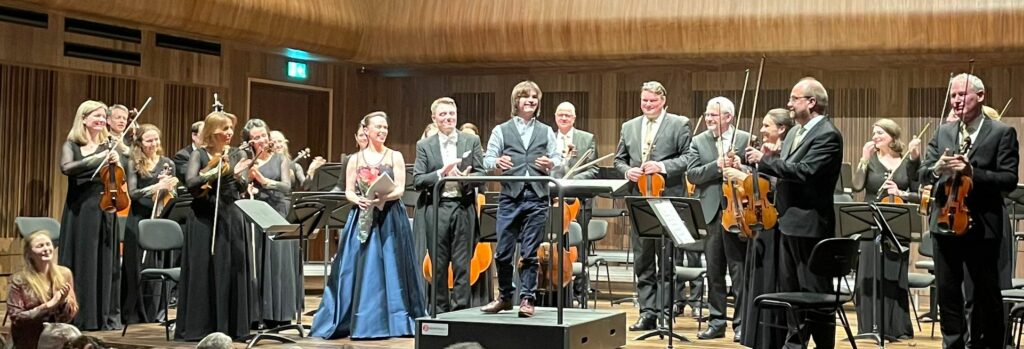
Ethan at a performance of his opera
I really look forward to working with the DSA to begin to challenge these assumptions by demonstrating what our young people can be capable of with appropriately adapted professional skills development within an educational framework.
My vision of change is that there is an adapted educational strand embedded within every university, college and conservatory in the UK and the choice for everyone who has Down’s syndrome who wants to, to attend.
Kind of projects I’m working on and hope to develop
I continue to develop new projects for performance. I have re-visited and revised my musical version of A Christmas Carol and I would love to find the right venue for it – it would be A Christmas Carol with an inclusive difference. This would be reflected in each actor’s ability to work with mutual respect and to bring out the best in their fellow actors, without judgement, while still striving for professional performance excellence.
My work with the Venus Blazing Music Trust is very close to my heart. Not only because I have a son who has Down’s syndrome, but also because inclusivity in its most comprehensive sense has always been a part of my professional work. I have learned the importance of having specific programmes and methods to encourage inclusivity and break down barriers. I also want to go beyond the ‘tick-box’ mentality which can suffice for some funding organisations. This approach produces modest results at best. Though not a large organisation, the VBMT pursues a programme which produces real impact on its participants and their families, many of whom have been working with the organisation for ten years. During that time we have had the support of partner organisations such as the London Symphony Orchestra Discovery programme, the Royal College of Music, the British Library, King’s Place, Belfast International Festival and dozens of highly motivated and talented young music students, many of whom have cognitive challenges themselves.
The real impact lies in the legacy which every participant will carry within them for the rest of their lives
The Venus Blazing Music Theatre Trust is at an exciting phase of its development. The core of its mission is provide a high level of transferable skills development with high quality professional leadership. It is guided by five principles:
- Creativity through music and theatre
- Confidence and friendship
- Championing Difference
- Encouraging Teamwork
- Creating new leaders
The programme started ten years ago with a grant from the John Lyons Trust which enabled us to hold our first group of monthly sessions at the Park Theatre, Finsbury Park, London. This has now grown to working with national partners on a regular basis. The British Library will be hosting our first public performance based on their current exhibition Unearthed: The Power of Gardening. The group has been working with the British Library for the past six months and the performance is the result of our young people (16-30) getting a chance to see the inner workings of the British Library and meeting and speaking with staff.
If you want to get a good taste of what our young adults are achieving come to the free public performance on Friday 25 July 2025 at 1.15pm in the Upper Mezzanine of the main Library on Euston Road.
Being an Ambassador for the DSA
The role will bring a closer relationship between the VBMT and the DSA. There are opportunities we can explore together to our mutual benefit. These might include sharing methodology and finding ways to extend the reach of the VBMT beyond London. Also it is clear that there is a demand for the ‘junior’ aspect of the programme where we can also develop capacity to work with the 13-16 year old group of children who have Down’s syndrome. I look forward to offering my ideas to how we can work together, but also hearing views from a wider range of families from the Down’s syndrome community. I also look forward to helping the DSA extend its profile and lobbying power, as well as greater exposure to the media.
I am very much intrigued by the potential of the beautiful Langdon Down Centre and Normansfield Theatre in Teddington. As a theatre director whenever I see a space I immediately start filling it in my mind with performance. I look forward to learning more about it and exploring its potential.
And finally…
The world changes by the presence of each and every one of our children, relatives and friends with Down’s syndrome. I look forward to using my experience and enthusiasm in the world of theatre and media on behalf of all those who need a vote of confidence in what their place in the world can be.
You can listen to the Lou’s BBC Radio broadcast The Father Instinct where he talks about the impact of his son, who has Down Syndrome, on his professional work and his own understanding of himself as a father. And you can find out more about Lou’s work on his website LouStein.co.uk.
You can read more about Ethan, his love of cooking and his musical achievements in this blog post.