
The Down’s Syndrome Association (DSA) is now finalising our response to the Government’s consultation relating to the draft statutory guidance for the Down Syndrome Act 2022 (relates to England only). We will submit this before the deadline of 30 March 2026.
We are submitting one response from the DSA and one from Our Voice members. Normally Our Voice feedback is incorporated into an overall DSA response, but the word count for this consultation does not allow us to do this, whilst doing justice to the feedback that Our Voice have provided, following in-depth engagement with the Easy Read materials over many weeks.
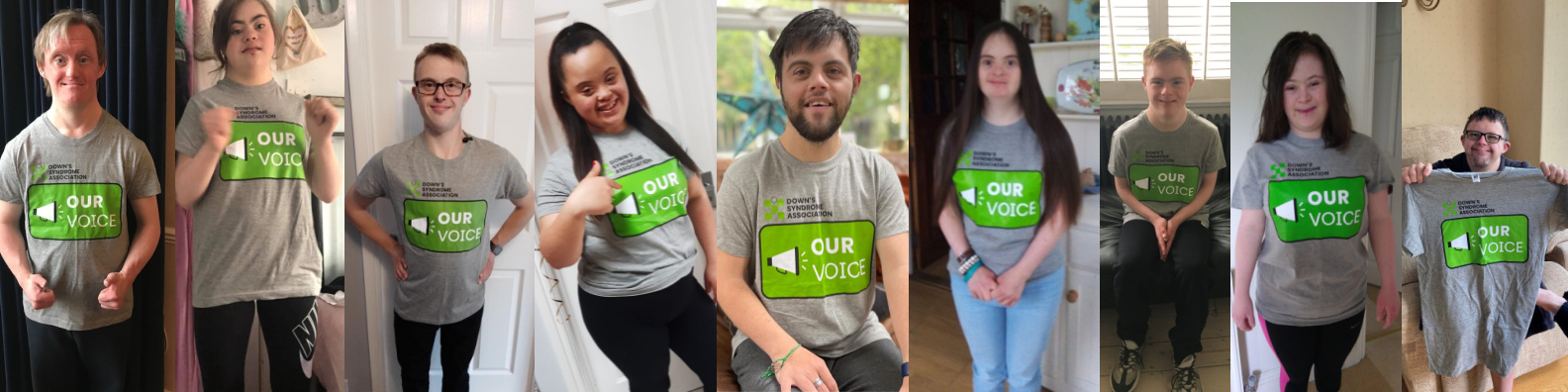
Our submissions bring together decades of specialist knowledge from across education, health, social care, housing and employment. But just as importantly, they reflects the lived experience and insight of people who have Down’s syndrome, shared through our Our Voice self‑advocacy network. We have also drawn on the incredibly helpful feedback from our series of online events engaging with families and professionals to help shape our response.
Clarity, accessibility and meaningful improvement
We have emphasised the need for the draft guidance to be clearer, more consistent and genuinely accessible for the people who will rely on it most. Families, practitioners and commissioners frequently dip in and out of sections depending on immediate need, so the structure, language and layout of the final guidance must fully support them. This includes clearer explanations of legal duties, avoiding jargon, and stronger cross‑referencing between health, education, social care and housing.
The need for accessibility came through powerfully in the Our Voice discussions. Members highlighted that parts of the Easy Read draft guidance were difficult to read or understand:
‘The writing font should be bigger.’
‘Key words need to be bold so we know what is important.’
‘Bigger and better pictures would help us understand it more.’
Health: clear information, respectful language
Our Voice members also focused closely on how the Easy Read draft explained health issues. They welcomed clarity in some areas but raised concerns where language felt confusing or insensitive.
For example, describing dementia as developing at a ‘younger age‘ left several participants worried:
‘Some of us thought it could mean children.’
Likewise, they felt the wording around end‑of‑life care in one section was needlessly harsh:
‘The final sentence was very blunt… cold and upsetting.’
Their feedback highlights how crucial it is that the Down Syndrome Act guidance uses clear, reassuring and respectful language.
Across our full response, we stress the importance of reflecting current evidence, recognising the lifelong nature of many health needs and ensuring smooth transitions from paediatric to adult services. We also highlight wellbeing factors such as loneliness and social isolation, which have a significant impact on health.

Social care: recognising real lives and real needs
In the social care section, Our Voice members emphasised that the guidance must reflect the real diversity of people’s lives. As one person explained:
‘Not everyone needs help washing or getting dressed.’
They also wanted the guidance to address safety in a wider sense, noting that staying safe includes online spaces and social situations:
‘It should say about being safe socially – online and when out with friends.’
The DSA response also emphasises the need for well-defined expectations concerning long-term support, consistency, and collaboration with families, areas where many adults with Down’s syndrome often encounter obstacles.
We recommend more explicit separation between short-term and lifelong assistance, stressing the importance of continuity, familiarity, and clear communication. We highlight the significance of Direct Payments, Individual Service Funds, along with the need to improve support for age-related decline or dementia.
Education and preparation for adulthood
Our Voice members spotted several structural and clarity issues in the education section of the Easy Read document, such as unexplained terminology, confusing layout and inconsistent visuals:
‘The speech bubble is empty – it’s confusing.’
This aligns with our broader feedback that the guidance needs stronger explanations, a clearer link between health, care and education responsibilities, and a more realistic understanding of the pathways young people with Down’s syndrome might typically take.
We stress the importance of high expectations, meaningful employment pathways, and early preparation for adulthood. Clearer information on home-to-school transport rights is also needed.

Employment
Drawing on our long‑standing expertise, we stressed that too many people who have Down’s syndrome continue to face avoidable barriers to securing meaningful work. The draft guidance acknowledges the issue but remains too cautious.
We argue there is a need for a clearer expectation that everyone can work with the right support, and for the guidance to reflect the national frameworks and evidence‑based approaches that already exist to help employers do this well. We also emphasised that high‑quality work experience and early careers planning are essential if young people who have Down’s syndrome are to move successfully into employment, and that this needs to be embedded consistently from Year 9 onwards.
Housing
On housing, we have welcomed the inclusion of supported living options but noted that the guidance still underplays the practical barriers families face in navigating the system. We highlighted the need for stronger alignment between housing and adult social care, and for ordinary housing with the right support to be encouraged wherever appropriate, rather than residential care becoming the default simply because other models aren’t commissioned locally.
We also called for earlier planning during education transitions and for the guidance to recognise the importance of housing stability, especially for adults who may develop dementia, where moves away from familiar environments can be deeply damaging.

Help & Support and the Annex
One striking comment from Our Voice came when reviewin ‘help and support‘ section:
‘We don’t think this is help and support.’
They felt strongly that guidance claiming to offer help should do more than outline complaints procedures, it should signpost people to actual sources of support and advice.
In our response, we stressed that the Annex requires substantial strengthening to properly reflect the depth and breadth of evidence‑based, co‑produced resources that already exist to support people who have Down’s syndrome. As it stands, the Annex omits a wide range of trusted materials developed over many years by the Down’s Syndrome Association, leaving readers without access to some of the most authoritative guidance available.
We also highlighted the need for greater diversity in the examples and case studies to ensure the annex genuinely reflects the experiences of families from a broad range of backgrounds and communities. Our message is clear: the annex has the potential to be a genuinely valuable tool, but only if it presents a fuller, more representative and more robust picture of the support landscape.

A guidance shaped by expertise and real voices
Our overarching message is clear: the final statutory guidance must be practical, accessible and grounded in the lived experiences of people who have Down’s syndrome. The insights from Our Voice members offer direct, thoughtful perspectives that only lived experience can provide.
We encourage individuals, families, practitioners and organisations to submit their own consultation responses. Your insights, especially from people who have Down’s syndrome, will help ensure that the final statutory guidance is stronger, clearer and truly reflective of what people who have Down’s syndrome need to thrive and live the life of their choosing.

Best Practice Examples and Resources
To empower families, practitioners and commissioners in confidently implementing the guidance once it is finalised, we have developed a comprehensive suite of dedicated pages. These pages are thoughtfully curated to provide access to the most up-to-date, evidence-informed good practice and advice. Our resources cover every aspect addressed in the consultation, ensuring that support is both relevant and tailored to real-world needs.
These resources are designed not only to help services remain aligned with the latest expertise, but by drawing on lived experience and proven approaches, we enable practitioners to deliver truly outstanding outcomes for people who have Down’s syndrome and their families.
To make navigation straightforward, each topic area includes clearly signposted materials and contact details for further support. This ensures that everyone can quickly find reliable, actionable advice.
We encourage everyone to make full use of these resources, share feedback, and suggest further examples of best practice, so together we can build a truly inclusive and supportive environment for people who have Down’s syndrome.
5 March 2026