
 |
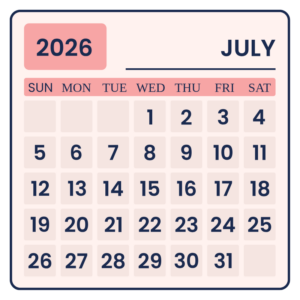
In July people all over the world celebrate Disability Pride Month. |
 |
People use the Disability Pride Flag to show their support.
|
We asked Joe and Catherine, who work for the DSA, some questions about Disability Pride month.
What does Disability Pride mean to you?
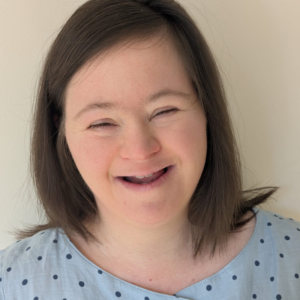
Catherine |
Catherine said:
‘I am very proud of who I am. To be disabled, to be the person who I am today, and of course, to be my own version of myself.’ |

Joe |
Joe said:
‘What disability pride means to me is the sense of identity. It’s about the achievements that you build. No matter who you are we all face obstacles in our lives. But the main thing is just showing you can do things in your life, compared to what people think you can’t.’ |
What are you proud of?
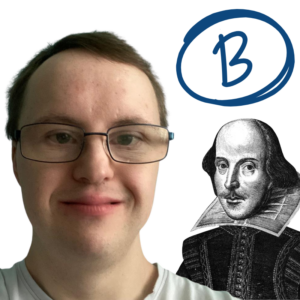 |
Joe said:
‘When I was a kid, we were learning about William Shakespeare in English. I watched the movie and then that took me to see the live play of Macbeth. I got a Grade B! ‘Becoming a student representative at college. I felt so good just to have that kind of thing where I can actually start to help people like myself. ‘I’ve come a long way since I was a kid, even to achievements like going to the Down Syndrome World Congress in Australia.’
|
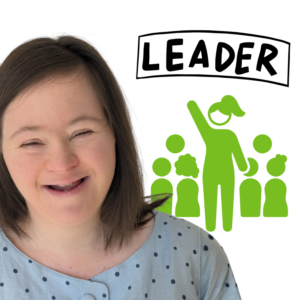 |
Catherine said:
‘I have gained a lot of knowledge and I’m so proud of what I have achieved. ‘I’m so glad I’m doing this, to find myself and even stand up for it as well. ‘Now, I’m starting my dance leadership course. I can actually be proud of myself to stand up for myself. I am applying for a grant fund for this leadership, for something bigger for a future of mine.’
|
Disability Pride Month is also about trying to change people’s attitudes about disability, so we asked Joe and Catherine this question:
what do you want others to understand about Down’s syndrome?
|
Catherine said:
‘There are two things to it: stereotypes and inclusion. ‘I really want them to actually, truly include us more. ‘This platform is really useful to show what people who have Down’s syndrome can do for themselves. I really want the public truly to understand it.’
|
|
Joe said:
‘My family and my friends they never see me as Down’s syndrome; they see me as a person and they naturally include me like everyone should. ‘People treat us purely on a general, broad scope. You need to find out who we are individually, rather than using a broad-brush myth or stereotype.’ |
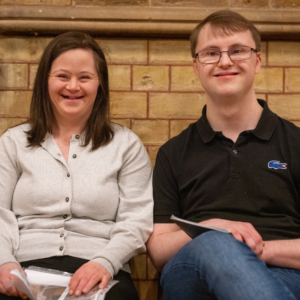 Joe and Catherine work as Inclusion Advisers at the DSA.
They share their lived experience with us, and other organisations.
They deliver Listen, Include Respect Training.
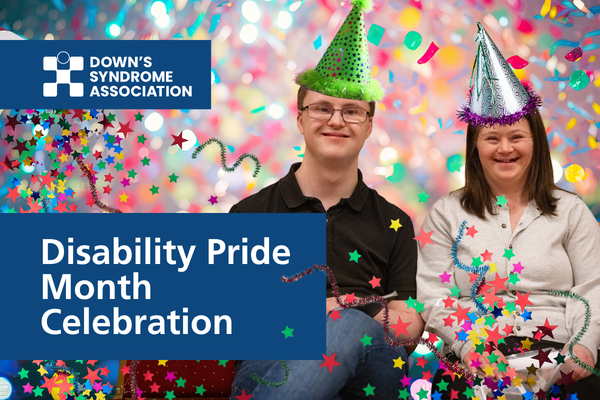 On Friday 31 July at 2pm, Catherine and Joe will be holding a special event to celebrate Disability Pride Month.
Find out more and register here.
Do you want to help break down barriers and include more people who have Down’s syndrome this Disability Pride Month?
Here are some ways the DSA can help:
 Our Voice
 is a network of hundreds of people who have Down’s syndrome who live in England, Wales and Northern Ireland.
Our Voice works on projects, helps to guide our work and tells us what they think about the work we do. Some members meet weekly and some work on projects in focus groups.
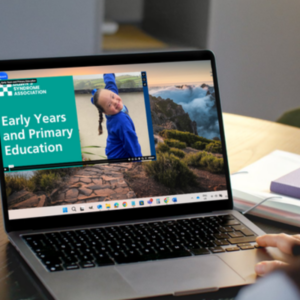 Online Training
We offer live webinars on a wide range of topics, as well as on-demand recordings to watch at your convenience.
Helpline
 Our experienced and knowledgeable Helpline Advisors are backed up by a team of Specialist Advisers.
We can answer questions on any topic relate to Down’s syndrome.
Contact us via email on info@downs-syndrome.org.uk or call 0333 1212 300 (Monday to Friday, 10am-4pm).
WorkFit
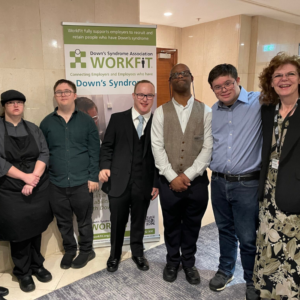 WorkFit is the DSA’s employment programme.
We bring together employers and job-seekers who have Down’s syndrome.
Get in touch with us today!
Email info@downs-syndrome.org.uk or call 0333 1212 300.
Sign up for our newsletter here to keep up to date on all our work.
Help us to continue our work with a donation today.